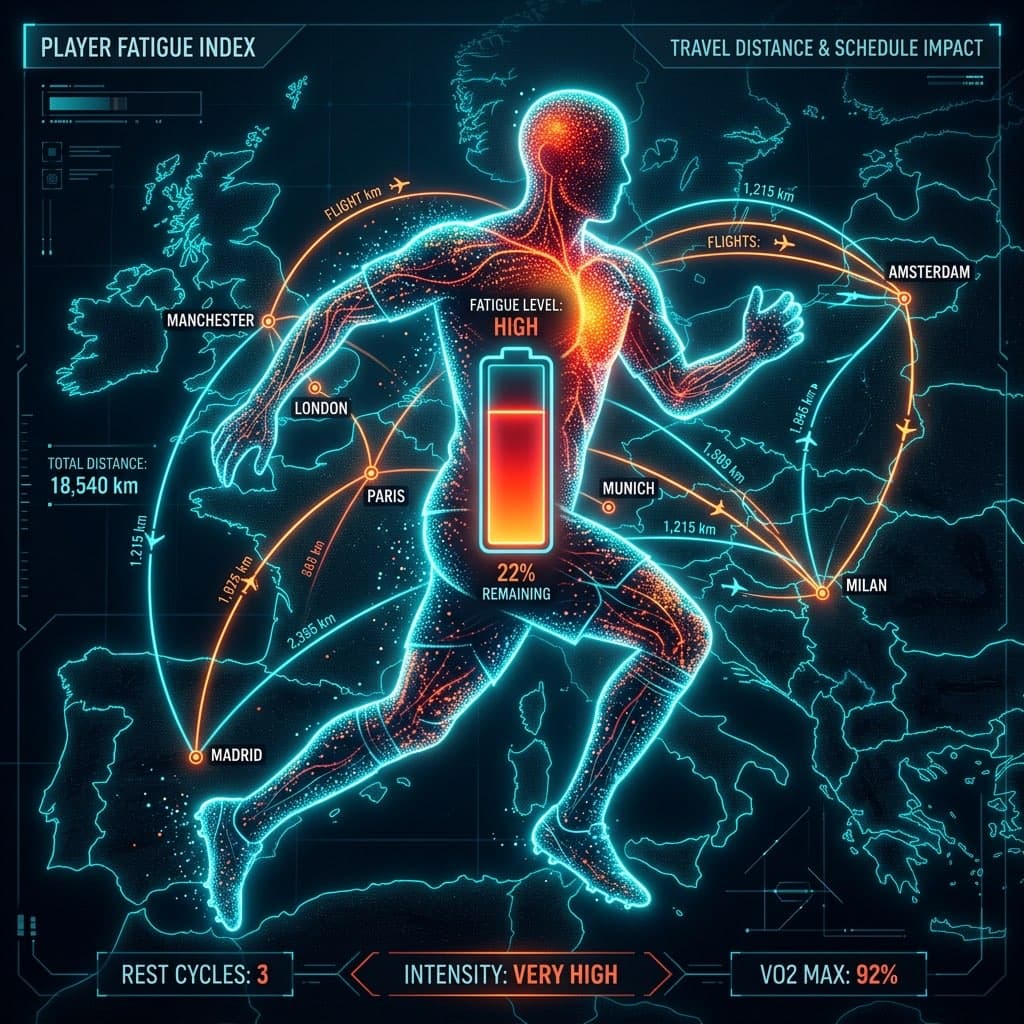
A common misconception in football analytics is that predicting player fatigue requires access to private, highly guarded biometric data—like the GPS vests or heart-rate monitors players wear during training.
While that data is incredibly valuable to the club's medical staff, it is completely inaccessible to the public markets. Does this mean we cannot predict physical drop-offs? Absolutely not.
In fact, by utilizing Open-Source Intelligence (OSINT) and Artificial Intelligence, we can accurately model fatigue without ever seeing a single heartbeat.
The Invisible Enemy: Schedule Congestion
The modern football calendar is unrelenting. Top-tier teams compete in their domestic league, domestic cups, continental tournaments (like the Champions League), and players frequently travel for international duty.
When traditional bettors look at a Saturday afternoon fixture, they see "Team A vs Team B." They might look at the league table and notice Team A is in 2nd place and Team B is in 14th. The odds will heavily favor Team A.
But what the average bettor misses is the context of the calendar:
- Did Team A play an intense, high-pressing Champions League match on Wednesday night in Turkey?
- How many thousands of kilometers did they travel in the last 72 hours?
- How many days of absolute rest did their starting XI actually get?
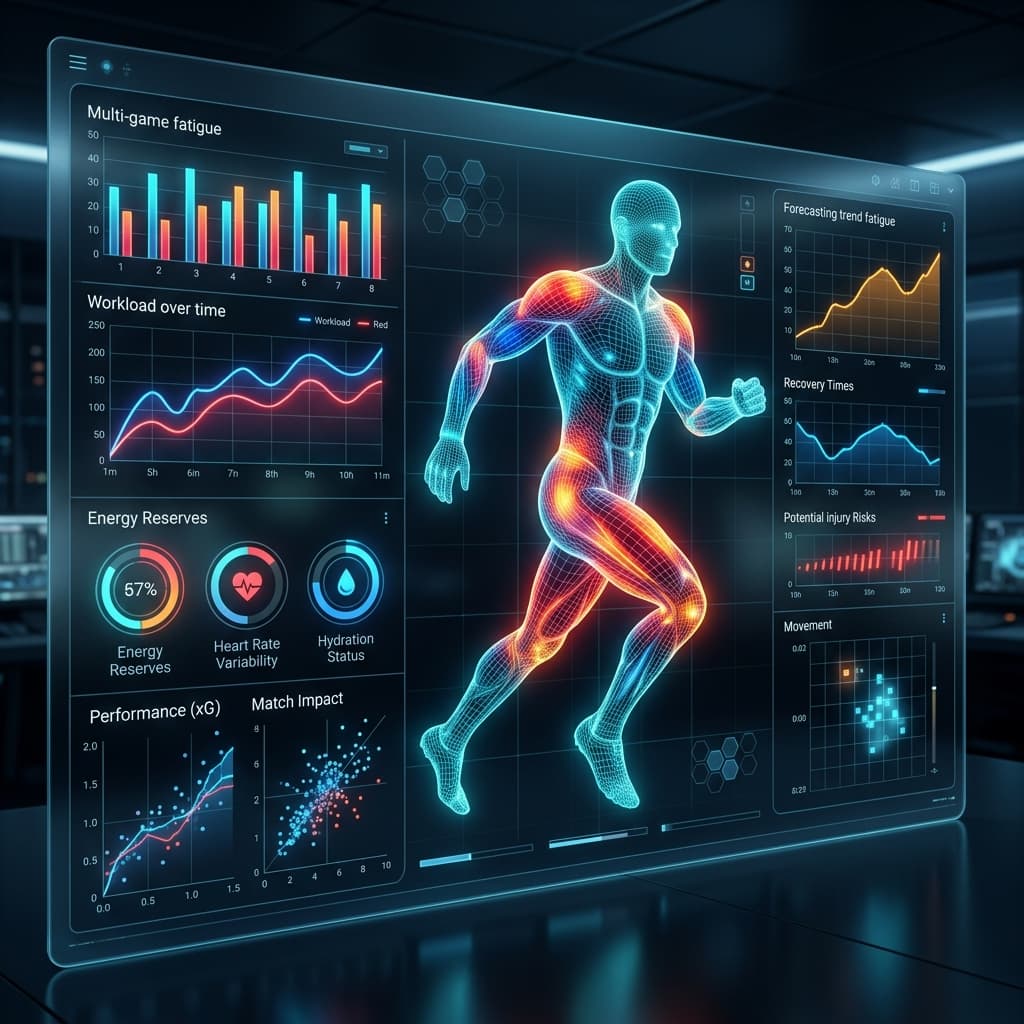
How FootINet Calculates "High Fatigue"
At FootINet, we don't rely on guesswork. Our OSINT engine continuously scrapes and aggregates schedule data, flight distances, and historical recovery times.
We feed this data into our Large Language Models (LLMs) to generate real-time Warning Flags. If a team has traversed three time zones and is playing their third match in seven days, our system automatically triggers a HIGH_FATIGUE flag.
Why This Creates an Edge
Traditional bookmakers are slow to adjust their baseline odds based on travel fatigue. They rely on the public's perception of a team's overarching quality.
When FootINet alerts you to a HIGH_FATIGUE scenario for a heavy favorite, it presents a massive arbitrage opportunity. You are armed with the knowledge that the favorite is mathematically likely to underperform their baseline xG, struggle with high-intensity sprints in the final 20 minutes, and potentially drop points against a well-rested underdog.
You don't need a player's private medical data to beat the market. You just need a smarter algorithm.